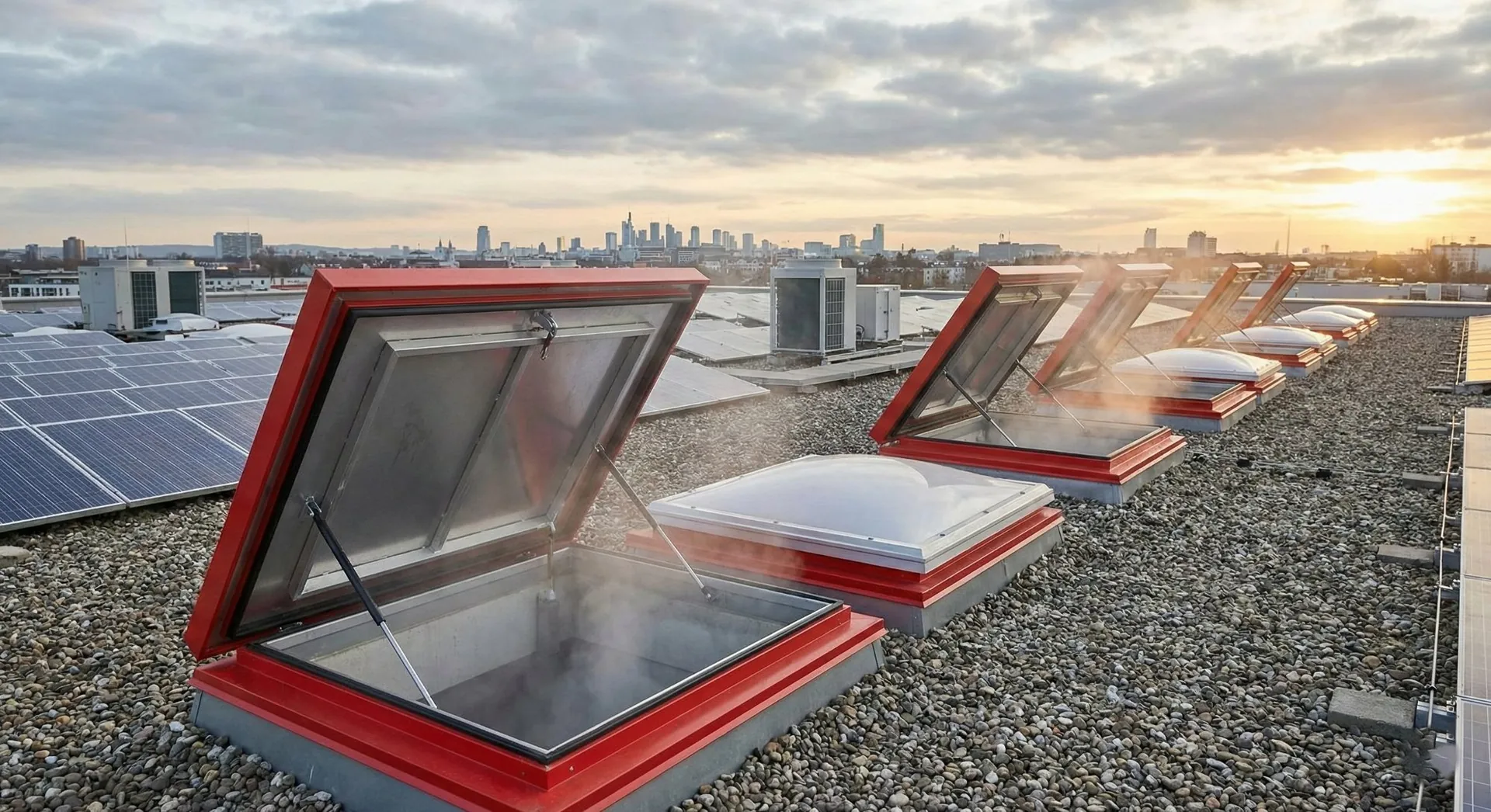
Smoke extraction systems are critical work equipment that ensure the evacuation of smoke and heat generated in large-volume areas such as industrial facilities, parking lots, and atriums, thereby reducing the risk of intoxication and facilitating firefighting operations. Periodic inspections of these systems are conducted in accordance with the Directive on Fire Protection Systems in Buildings and relevant standards.
1. Periodic Inspection Criteria
The following technical and safety criteria are taken as a basis for the periodic inspections of smoke extraction systems:
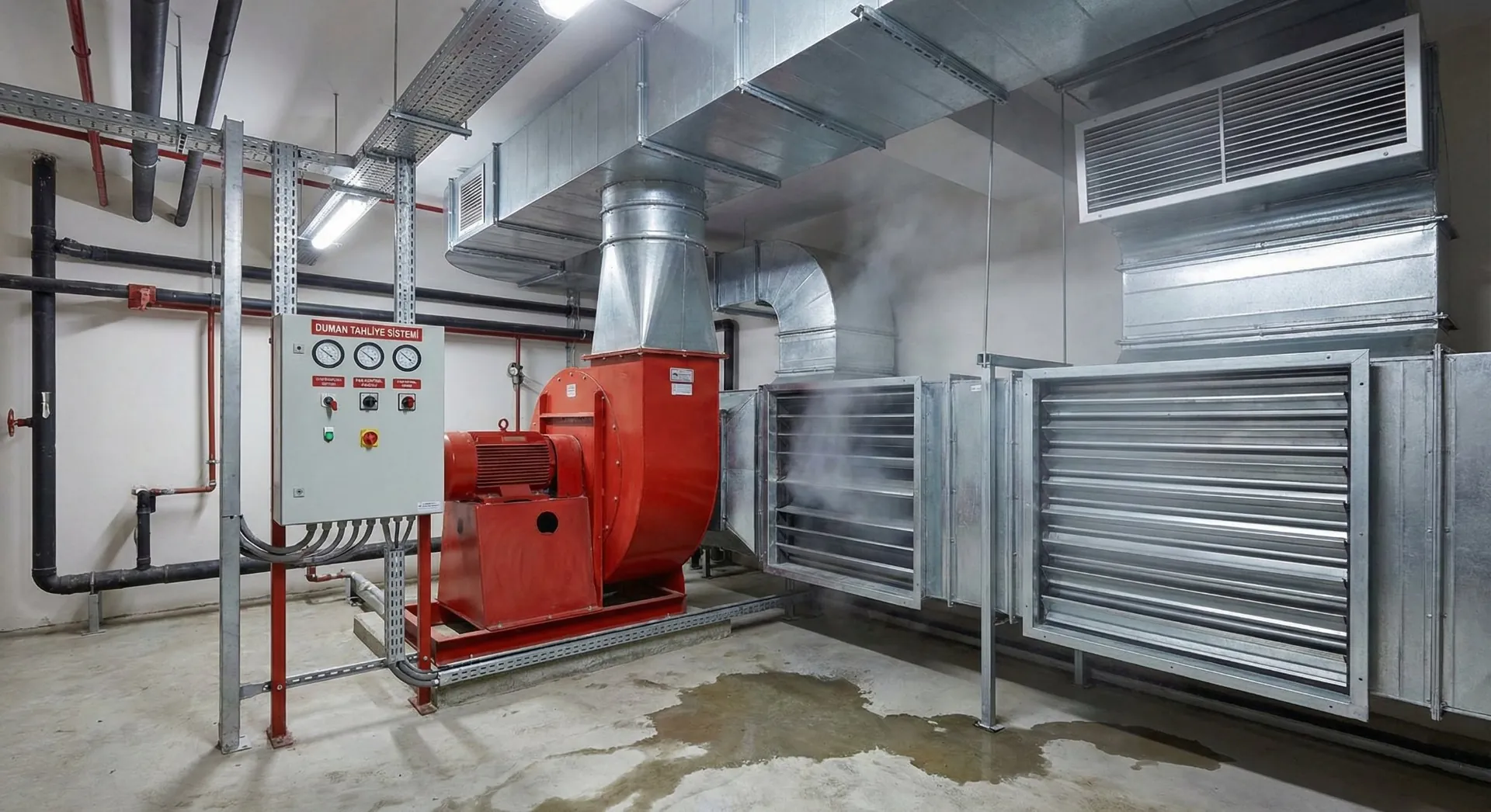
- Heat Resistance and Certification: It is verified that the fans used (Axial, Radial, or Jet Fans) belong to the heat resistance class required by the project (e.g., F300 - 300°C for 2 hours) and possess valid certification.
- Mechanical and Structural Integrity: The mechanical robustness and corrosion status of fan blades, housing, mounting bases, vibration isolators, and smoke dampers are evaluated.
- Airflow Management: The compliance of fresh air intake vents, exhaust discharge points, and jet fan positioning angles with the project is examined, along with any elements obstructing airflow.
- Power and Control Systems: The functionality of fire-rated (non-flammable) cabling, MCC panels, frequency converters, the "Fireman’s Switch," and manual control buttons is inspected.
- Marking: The legibility of fan direction arrows, power supply labels, and warning signs is evaluated.
2. Periodic Inspection Methods
Periodic inspection activities are carried out in an impartial, independent, and traceable manner using the following methods:
- Visual Inspection: The mounting safety of fans, electrical connections, and the open/closed positions of dampers are physically inspected.
- Functional and Scenario Testing: The system is triggered via a simulated alarm to test the opening of dampers, activation of jet fans, and the time required for main exhaust fans to reach full capacity.
- Flow Rate Measurement: Air velocity at exhaust vents or fan outlets is measured using an anemometer to verify whether the Air Changes per Hour (ACH) meets the project design requirements.
- Engineering Evaluation: All gathered data and test results are analyzed in accordance with engineering calculations and standard criteria to establish a final compliance decision.
3. Reporting and Compliance Decision
The report prepared as a result of the periodic inspection clearly includes the applied control methods, measurement results, regulatory and standard references, and the compliance status. The compliance decision is made solely based on objective technical data and measurable criteria.
Conclusion: Periodic inspections of smoke extraction systems are conducted based on the principles of technical competence and reliability, aiming to maintain visibility during a fire, reduce ambient temperatures, and ensure life safety.